The Ultimate Action Verbs List: 250+ Power Words to Transform Your Resume
 Angelina Koss8 min read

Hiring managers read hundreds of applications for a single opening. When every candidate writes that they were “responsible for managing projects” or “helped increase sales,” those resumes blur together.
Using a targeted action verbs list is the fastest way to make your achievements stand out. Strong verbs transform flat job descriptions into clear proof of your impact, shifting the focus from what you were assigned to do to what you accomplished.
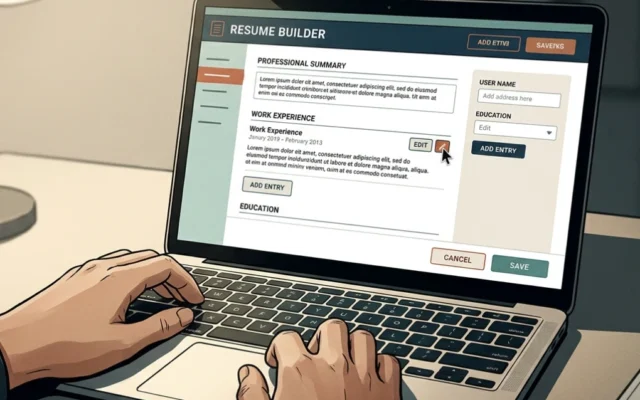
Whether you are formatting your document from scratch with a professional resume builder or polishing your latest career update, the right words carry serious weight. Below, we have compiled and categorized over 250 dynamic verbs—drawing from career frameworks used by institutions like MIT, Harvard Business School, and UC Davis—so you can find the exact word for every skill on your resume.
Why Strong Action Verbs Matter on Your Resume
Every line in your work history is prime real estate. Starting your Bullet Points with dynamic verbs does three critical things for your application:
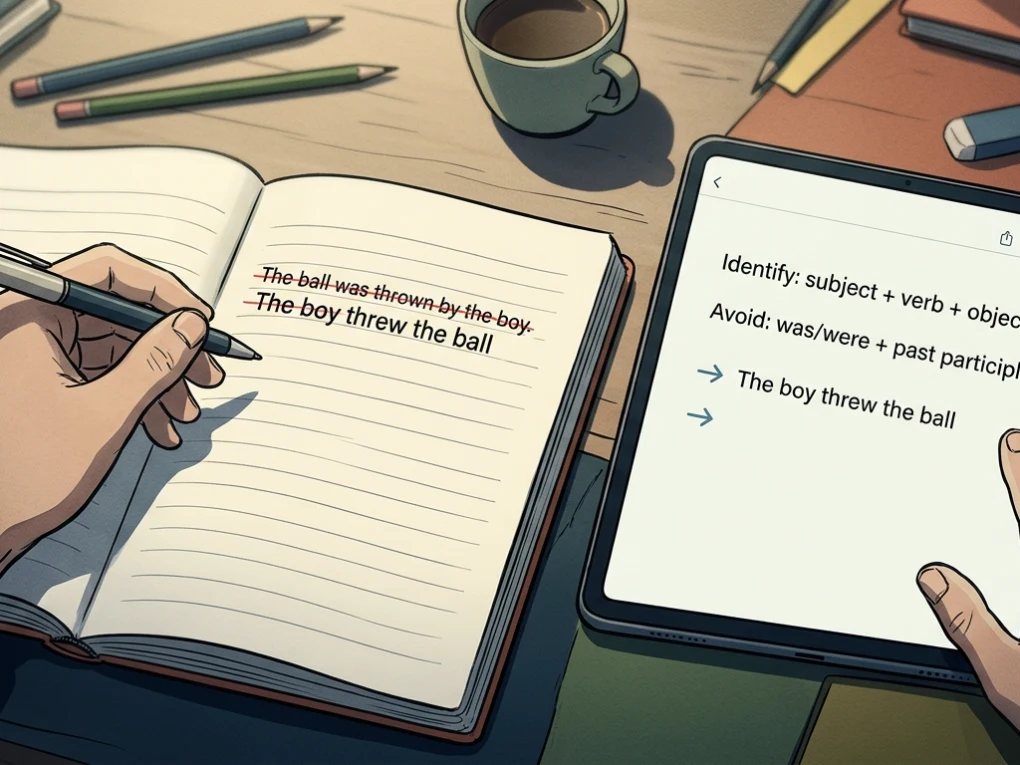
- Eliminates passive language: Phrases like “duties included” or “was tasked with” make you sound like a bystander in your own career. Action verbs put you in the driver’s seat.
- Communicates specific nuance: Saying you “led” a team is fine, but saying you “orchestrated,” “mentored,” or “mobilized” tells the recruiter how you led.
- Strengthens ATS and human readability: While Applicant Tracking Systems primarily scan for noun-based hard skills and job titles, human recruiters scan the first two words of every bullet point. Strong verbs hook their attention and guide them directly to your metrics.
Categorized Resume Action Verbs List by Skill
To get the most out of this resume action verbs list, match the verb to the core skill required in the job description. Group your achievements by theme to show a well-rounded track record.
Leadership & Management
If you were in charge of a project, department, or initiative from start to finish, skip overused words like “led” or “managed.” Use these verbs to show authority, ownership, and direction:
- Administered
- Appointed
- Authorized
- Chaired
- Consolidated
- Coordinated
- Decided
- Delegated
- Directed
- Enforced
- Established
- Executed
- Headed
- Hosted
- Instituted
- Mobilized
- Governed *Guided
- Orchestrated
- Oversaw
- Pioneered
- Presided
- Prioritized
- Regulated
- Spearheaded
- Steered
- Supervised
Communication, Influence & Negotiation
Almost every role requires teamwork and clear communication. Instead of stating that you “communicated with clients,” use verbs that show how you persuaded stakeholders, shared complex ideas, or built consensus:
- Addressed
- Advocated
- Arbitrated
- Articulated
- Authored
- Briefed
- Campaigned
- Clarified
- Collaborated
- Convinced
- Corresponded
- Counseled
- Defined
- Interpreted
- Lectured
- Lobbied
- Mediated
- Moderated
- Negotiated
- Persuaded
- Presented
- Promoted
- Publicized
- Reconciled
- Translated
Problem-Solving, Efficiency & Results
Recruiters love candidates who fix broken processes, save money, or drive growth. When you have a strong metric or outcome to share, pair it with an impact-driven verb:
- Accelerated
- Achieved
- Amplified
- Boosted
- Capitalized
- Conserved
- Consolidated
- Deducted
- Delivered
- Enhanced
- Expanded
- Expedited
- Generated
- Improved
- Lifted
- Maximized
- Outpaced
- Overhauled
- Realigned
- Reduced
- Resolved
- Restored
- Restructured
- Revitalized
- Simplified
- Streamlined
- Surpassed
- Transformed
- Yielded
Research, Data & Financial Analysis
For roles in finance, consulting, science, marketing, or operations, you need to show that your decisions are backed by evidence. Use these verbs to highlight your analytical rigor:
- Analyzed
- Assessed
- Audited
- Budgeted
- Calculated
- Charted
- Compiled
- Evaluated
- Examined
- Forecasted
- Identified
- Inspected
- Interpreted
- Investigated
- Mapped
- Measured
- Modeled
- Projected
- Qualified
- Quantified
- Researched
- Surveyed
- Synthesized
- Tested
- Tracked
- Verified
Technical, Engineering & IT
When detailing software development, systems architecture, or hands-on technical execution, precision matters. Replace “worked on” or “built” with verbs that reflect the engineering lifecycle:
- Architected
- Assembled
- Automated
- Calculated
- Coded
- Computed
- Configured
- Debugged
- Deployed
- Designed
- Devised
- Engineered
- Fabricated
- Installed
- Integrated
- Maintained
- Migrated
- Modernized
- Operated *Optimized
- Programmed
- Prototyped
- Refactored
- Standardized
- Troubleshot
- Upgraded
Creative, Design & Innovation
If you build brands, write copy, design products, or launch new initiatives from the ground up, your verbs should reflect originality and vision:
- Acted
- Adapted
- Composed
- Conceptualized
- Created
- Customized
- Designed
- Developed
- Directed
- Drafted
- Edited
- Fashioned
- Formulated
- Founded
- Illustrated
- Initiated
- Innovated
- Introduced
- Invented
- Launched
- Originated
- Performed
- Photographed
- Redesigned
- Revised
- Revitalized
- Shaped
- Visualized
Client Success, Teaching & Support
Whether you work in customer success, healthcare, education, or account management, helping others succeed is a core metric. Highlight your supportive impact with these words:
- Advised
- Coached
- Educated
- Enabled
- Encouraged
- Facilitated
- Guided
- Informed
- Instructed
- Mentored
- Motivated
- Nurtured
- Onboarded
- Rehabilitated
- Supported
- Taught
- Trained
- Tutored
- Upskilled
Overused Resume Phrases vs. High-Impact Action Verbs
Seeing an action verbs list is helpful, but knowing how to swap out weak phrasing in real life is what gets you interviews. Compare how passive language stacks up against targeted action verbs below:
| Overused / Weak Phrase | Strong Action Verb Alternatives | Before & After Resume Example |
| Responsible for | Directed, Oversaw, Executed, Administered |
Before: Responsible for the quarterly marketing budget.
After: Administered a $120K quarterly marketing budget, reallocating spend to reduce cost-per-lead by 18%. |
| Helped / Assisted | Collaborated, Facilitated, Supported, Partnered |
Before: Helped the sales team onboard new enterprise clients.
After: Partnered with enterprise account executives to onboard 14 new clients, cutting setup time by 3 days. |
| Worked on | Engineered, Developed, Executed, Formulated |
Before: Worked on the company’s new mobile checkout feature.
After: Engineered a one-click mobile checkout flow that reduced cart abandonment by 22%. |
| Led / Managed | Spearheaded, Orchestrated, Chaired, Mobilized |
Before: Led a team of 8 customer support reps.
After: Supervised and coached a team of 8 support specialists, lifting customer satisfaction (CSAT) scores from 84% to 93%. |
| Made / Created | Architected, Launched, Pioneered, Designed |
Before: Made a new training manual for incoming interns.
After: Authored a standardized 30-page training manual that onboarded 15 summer interns across 3 departments. |
How to Use Action Verbs Effectively on Your Resume
Dropping a fancy verb into the start of a sentence will not fix a vague bullet point on its own. If you are learning how to write a resume that converts, follow this four-step formula to make every verb count:
- Follow the “Action Verb + Task + Result” formula: Start with a strong verb, explain what you did, and finish with the measurable outcome. For example: “Streamlined (Verb) the monthly inventory audit process using automated SQL scripts (Task), saving 12 hours of manual labor per week (Result).”
- Use the correct verb tense: Always use present tense verbs (e.g., Orchestrate, Analyze, Build) for your current job, and past tense verbs (e.g., Orchestrated, Analyzed, Built) for all previous roles. Consistency shows attention to detail.
- Avoid repeating the same verb: Never start two consecutive bullet points with the same word. If you used “Developed” in your first bullet, swap in “Engineered,” “Formulated,” or “Launched” for the next one.
- Upgrade your top section too: Action-oriented language isn’t just for your work history. Review our Resume Summary Examples to see how dynamic verbs can make your opening profile immediately compelling.
- Keep your descriptions concise: Strong verbs let you cut out filler words. This helps keep your layout clean and directly impacts How Long Should a Resume Be—allowing you to pack more value into a crisp one-to-two-page document. (Note: Whether you are submitting a concise one-page resume or a multi-page academic document—see our guide on resume vs CV—every single experience entry should still lead with an action verb.)
Frequently Asked Questions (FAQ)
What are resume action verbs?
Resume action verbs are dynamic verbs placed at the very beginning of your resume bullet points to describe a specific action you took. They replace passive phrases like “was responsible for” with clear, active words like “spearheaded,” “engineered,” or “negotiated,” making your accomplishments clearer and more persuasive to recruiters.
Which verbs should I avoid on my resume?
Avoid passive, vague, or overused phrases that tell the reader what you were supposed to do rather than what you achieved. The most common phrases to cut include “responsible for,” “duties included,” “worked on,” “helped,” “assisted with,” and “tasked with.” Also avoid generic verbs like “did” or “made.”
Should resume action verbs be in past or present tense?
Use past tense action verbs (e.g., Managed, Forecasted, Built) for all past jobs and completed projects. Use present tense action verbs (e.g., Manage, Forecast, Build) only for the responsibilities you actively perform in your current job.
Can I use the same action verb more than once on my resume?
You can use a verb twice if it appears in different job entries, but try not to repeat the exact same action verb more than twice across your entire resume. Never repeat the same verb within the same job block. Using a varied action verbs list demonstrates a broader vocabulary and highlights different dimensions of your skill set.
Swapping out tired, passive phrasing for precise action verbs is one of the highest-return edits you can make to your job application. Take ten minutes today to scan the left margin of your resume. Highlight every repeated verb and every instance of “responsible for,” then replace them with targeted words from the categories above.
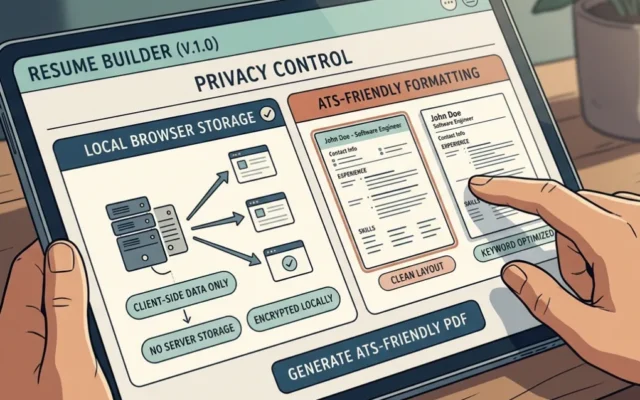
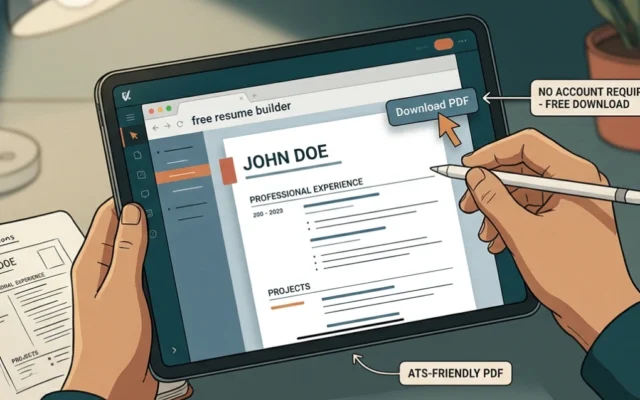
Ready to pair your newly upgraded bullet points with a clean, recruiter-approved layout? Build and customize your application in minutes using the SonCV Resume Builder—designed to help your achievements pass ATS filters and land on the hiring manager’s desk.